
What Dry Ageing Does to Beef, and Why 30 Days Is the Number
Dry-aged beef is meat that's been hung uncovered in a controlled cold room for weeks at a time, losing water while its own enzymes go to work on the muscle fibres. It’s a more expensive and longer process than simply cooking and serving a steak that’s sitting in the fridge. So, why do restaurants do it? And what is the perfect amount of ageing that you should look for on a steakhouse menu?
Quick Answer
Dry ageing removes moisture from beef in a temperature- and humidity-controlled room, concentrating flavour and allowing natural enzymes to tenderise the meat.
30 days is the point at which flavour development and tenderness are well advanced, without the yield loss and cost of longer programs.
Shorter ageing (14–21 days) gives a milder, cleaner beef flavour; longer ageing (45–90 days) pushes into funkier, blue-cheese and umami territory.
Wet-aged beef (vacuum-sealed) tenderises too, but doesn't lose moisture or develop the same crust, so the flavour stays closer to fresh beef.
Not every cut is worth dry ageing. Well-marbled cuts like rib and sirloin hold up; lean cuts just dry out and lose weight for no flavour gain.
What is Dry-Aged Beef?
Dry-aged beef starts as a large primal cut (a whole rib or striploin, not individual steaks) and is hung or racked in a cold room set to roughly 0–4°C and 75–85% humidity, with a steady flow of air moving across the surface. Over days and weeks, three things happen at once.
Moisture evaporates from the exposed surface. This evaporative loss concentrates proteins and other flavour compounds in the muscle, producing the roast, buttery, nutty character that vacuum-sealed beef never develops.
The beef's own enzymes break down connective tissue and muscle fibre, which is what makes an aged steak noticeably more tender than a fresh cut of the same grade.
A firm outer crust forms. The right humidity keeps that crust dry enough to hold back spoilage bacteria while still letting flavour-building mould species develop. That crust is trimmed away before the steak ever reaches a plate.
Why Is 30 Days the Number for Dry-Aged Beef?
Thirty days sits at the point where tenderness and flavour have both developed properly, but the beef hasn't yet lost so much weight that the economics stop making sense. MLA's research puts yield losses from dry ageing (evaporation plus trimming the dried crust) at up to 50% of the original weight, and that loss increases the longer the beef sits in the room.
At 14 to 21 days, dry ageing has barely started. The enzymatic tenderising is well underway, but the surface hasn't dried long enough to build the deep, roasted, nutty character that separates dry-aged steak from a well-aged wet-packed cut. It's aged, technically, but it doesn't yet taste like it.
Push past 45 days and into the 60- to 90-day range, and the flavour turns a corner that most diners either love or can't get past. This is the territory of blue cheese, aged parmesan, and dried fruit notes, sitting atop a much smaller, much more expensive piece of meat. It's a style choice rather than an upgrade. Some people find 90-day beef transcendent, and just as many find it overwhelming.
Thirty days is the middle ground. It's long enough for the flavour compounds to build and the texture to soften properly, short enough that the yield loss hasn't run away from the cost, and mild enough that it reads as "incredible steak" rather than "an acquired taste." It's why so much dry-aged beef sold in Australian restaurants and butcheries sits in the 30 to 45-day range.
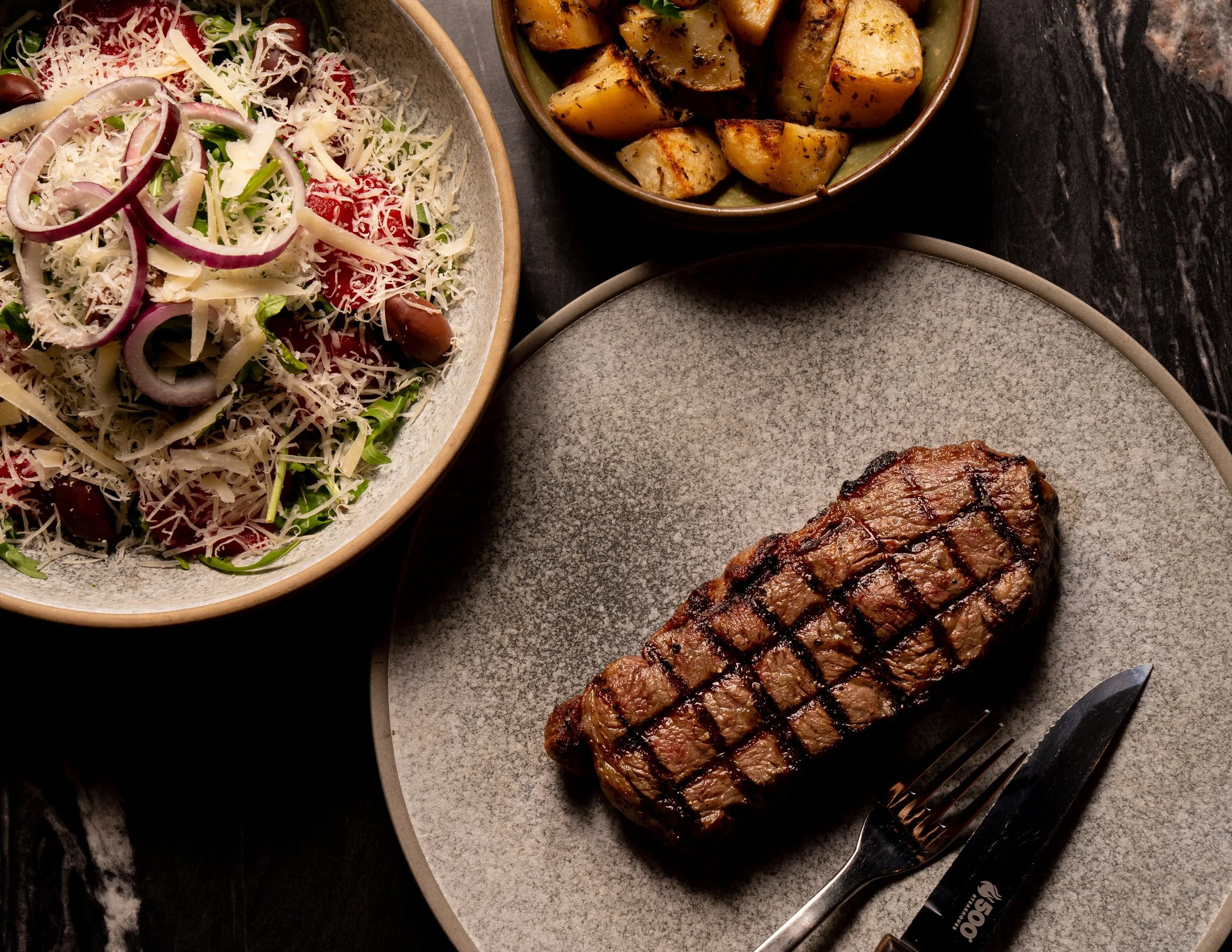
Dry Aged Steak vs Wet Aged Beef: What's the Difference?
Most beef sold in Australia, including much of what's labelled "aged" at the supermarket, is wet-aged: sealed in a vacuum bag and left in the fridge for one to four weeks. Both methods rely on the same internal enzymes to tenderise the meat. Wet ageing dates back to the 1960s and was developed specifically because vacuum sealing improved yield compared with the older dry ageing method.
The difference is what happens on the surface. Wet ageing keeps all the moisture locked inside the bag, so the beef tenderises without losing weight or developing a crust.
Dry ageing sacrifices yield for a completely different flavour profile: concentrated, nutty, savoury, unmistakably different from anything that's spent its life in plastic. Neither method is "better" in an absolute sense. They're aiming at different things, and the price gap between a wet-aged and a dry-aged steak is mostly the cost of that lost weight.
Which Cuts Suit Dry Ageing, and Which Don't
Dry ageing rewards fat. A well-marbled cut protects itself during the weeks in the cold room. The intramuscular fat holds moisture and flavour even as the surface dries out, which is why processors favour rib, sirloin and loin cuts from higher-grade Angus and wagyu carcasses. Our tomahawk steak is a bone-in rib with enough fat cover to age well and still land on the table tender and full-flavoured.
Lean cuts don't get the same benefit. Eye fillet, for instance, has very little intramuscular fat to protect it, so extended dry ageing just dries it out and shrinks it without adding much flavour.
This is also where wagyu earns its reputation. Heavy marbling means it can be aged longer with less risk of the meat turning dry or stringy, which is why it’s worth understanding a wagyu marble score before you order it.
Cost is the other trade-off. Yield loss of up to 50%, weeks of fridge space tied up in a single primal, and a butcher's time spent trimming crust all show up in the final price. That's simply the economics of dry-aged beef. There's no shortcut that gets the flavour without the weeks and the wastage.
Is Dry-Aged Beef Worth It? A Diner's Perspective
Not every steak needs to be dry-aged, and a good steak restaurant in Sydney will usually serve multiple options. A quick weeknight sirloin, cooked well and properly rested, is satisfying without ever having seen a dry-ageing room. Dry ageing earns its price tag when the occasion calls for something more, such as a birthday, an anniversary, or a table that wants the full steakhouse experience rather than a fast, good meal.
If you're deciding whether to spend up on a dry-aged cut, think about what you're actually chasing. Want maximum tenderness and a deep, savoury character without heading into funky territory? A 30 to 45-day dry-aged steak is the safe, rewarding choice.
Curious about wagyu specifically? Keep an eye out for offers such as our wagyu sirloin special, where the marbling does much of the heavy lifting alongside the ageing process. Either way, pair it with something considered from the bar and grill. A full-bodied red does dry-aged beef more favours than most people expect.
Book a table at any of 500 Degrees' three Sydney locations and try the difference for yourself. As a celebrated meat restaurant in Sydney, we dry-age in-house for 30 to 45 days on selected cuts, which is precisely the range this article has been building toward.
Frequently Asked Questions
What does dry-aged beef taste like?
Expect a deeper, more concentrated beef flavour than that of a fresh steak, often described as nutty, roasted, or buttery. At 30 days, it reads as intensely beefy rather than strange; push past 45 to 60 days, and it moves toward funkier, blue-cheese-like notes that not everyone enjoys.
Is dry-aged beef safe to eat?
Yes, when it's aged properly. The crust that forms on the outside during dry ageing is trimmed away before cooking, and the process is conducted under strict temperature, humidity, and airflow control to keep spoilage organisms out while allowing flavour development. Research on the safety of dry ageing has found that under the right conditions, dry-aged beef poses no greater food safety risk than other aged beef products.
Why is dry-aged beef expensive?
Mostly yield. Between evaporation during ageing and trimming the dried crust afterwards, a dry-aged primal can lose up to half its starting weight. Add in the weeks of dedicated fridge space and the butchery time involved, and the cost of properly dry-aging beef is baked into the price well before it reaches the grill.
Producers doing dry aging beef at scale also tend to select higher-grade carcasses to begin with, since a poorly marbled cut simply isn't worth the fridge space.