
Steak Doneness: What Rare, Medium Rare and Medium Actually Look Like
Order a medium-rare steak at two different restaurants, and you can end up with two different steaks. One kitchen's "medium rare" is another's "medium," and the gap between them is usually a matter of degrees (literally).
Doneness isn't about taste alone. It changes the colour of the meat, how much juice it retains, and how the fat renders. Get the steak doneness chart wrong by even five degrees, and a ribeye can go from buttery to chewy.
Here's exactly what each level looks like, feels like and means for your plate.
Quick Answer
Medium rare sits at 55–60°C internally. A warm, pink-red centre with the best balance of tenderness and juice, and the most ordered doneness in Australian steakhouses.
Six recognised doneness levels run from blue (very rare) through rare, medium-rare, medium, medium-well, to well-done.
Whole-muscle steak can be served rare safely because contamination sits on the surface, not the centre. Mince is different and needs to be fully cooked through.
Fattier cuts like ribeye and tomahawk suit medium rare best, since the marbling needs a little heat to render; leaner cuts like eye fillet hold up well at rare.
Chefs confirm doneness with touch and a probe thermometer, not by cutting the steak open and losing its juices.
The Steak Doneness Chart: Temperature, Colour and Texture
This is the steak doneness chart our chefs work from, final internal temperature after resting:
| Doneness | Internal Temp (°C) | Centre Colour | Texture |
|---|---|---|---|
| Blue rare | 46–49°C | Deep red-purple, barely warmed | Very soft, almost raw |
| Rare | 50–54°C | Bright red | Soft, slight spring |
| Medium rare | 55–60°C | Warm pink-red | Firm outside, yielding centre |
| Medium | 61–65°C | Pink throughout | Firm, still juicy |
| Medium well | 66–69°C | Thin band of pink | Firm, less juice |
| Well done | 70°C+ | No pink, grey-brown | Firm to dense, driest |
Every steak keeps cooking for a minute or two after it leaves the grill, so a good kitchen pulls it a couple of degrees early and lets the residual heat finish the job.
Blue Rare: Barely Touched by the Flame
Blue rare gets a hard sear on the outside (enough to form a crust and meet food safety requirements), while the inside stays close to raw. It's cool to warm in the centre, deep red to purple, and very soft under the fork. It's a niche order, best suited to a lean, high-quality cut like eye fillet, since there's no time on the grill for fat to render.
Rare: Bright Red and Springy
A rare steak has a bright red centre and a noticeably springy feel. Press it, and it bounces back quickly with only light resistance. It's cooked just long enough to warm the meat through without breaking down the muscle fibres, so the texture stays close to raw beef, just warmed.
Rare works well on lean cuts, but on a well-marbled tomahawk, it can leave the fat under-rendered and slightly waxy.
Medium Rare Steak: The Most Ordered Doneness
Medium rare steak is where most Australian diners land, and for good reason. At 55–60°C, the centre is a warm pink-red, the texture is firm on the outside but still yields easily in the middle, and the fat has had just enough heat to start rendering without drying out the meat. It's the doneness that lets a well-aged, well-marbled cut show off both its flavour and its tenderness in the same bite.
Ask for medium-rare on our tomahawk steak in Sydney, and the extra fat cap has a chance to melt into the meat as it rests, which is exactly why it's our most requested doneness for that cut.
Medium: Pink Through, No Red
A medium steak loses its red centre entirely. It's pink from edge to edge, with a firmer bite than medium rare. There's still noticeable juice, but the fat has rendered further, and the meat has tightened up.
It's a solid middle-ground order for diners who want a fully "cooked" look without losing tenderness altogether, and it suits leaner cuts like scotch fillet or striploin that don't need as much fat rendering time as a tomahawk or ribeye.
Medium Well: A Trace of Pink
Medium well leaves just a thin band of pink at the very centre, with the rest of the steak cooked through to a light grey-brown. Texture firms up noticeably here, and juiciness starts to drop off. It's a reasonable choice for a thick, well-marbled cut, where the extra fat helps offset moisture loss, but on leaner cuts it tends to dry out.
Well Done: Fully Cooked Through
Well done means no pink anywhere in the steak. It's grey-brown from surface to centre, firm to dense, and has lost the most moisture of any doneness level. It's a valid preference, and there's no reason to apologise for ordering it, but it rewards a well-marbled, thicker cut far more than a lean one, since the fat is what keeps a well-done steak from turning tough.
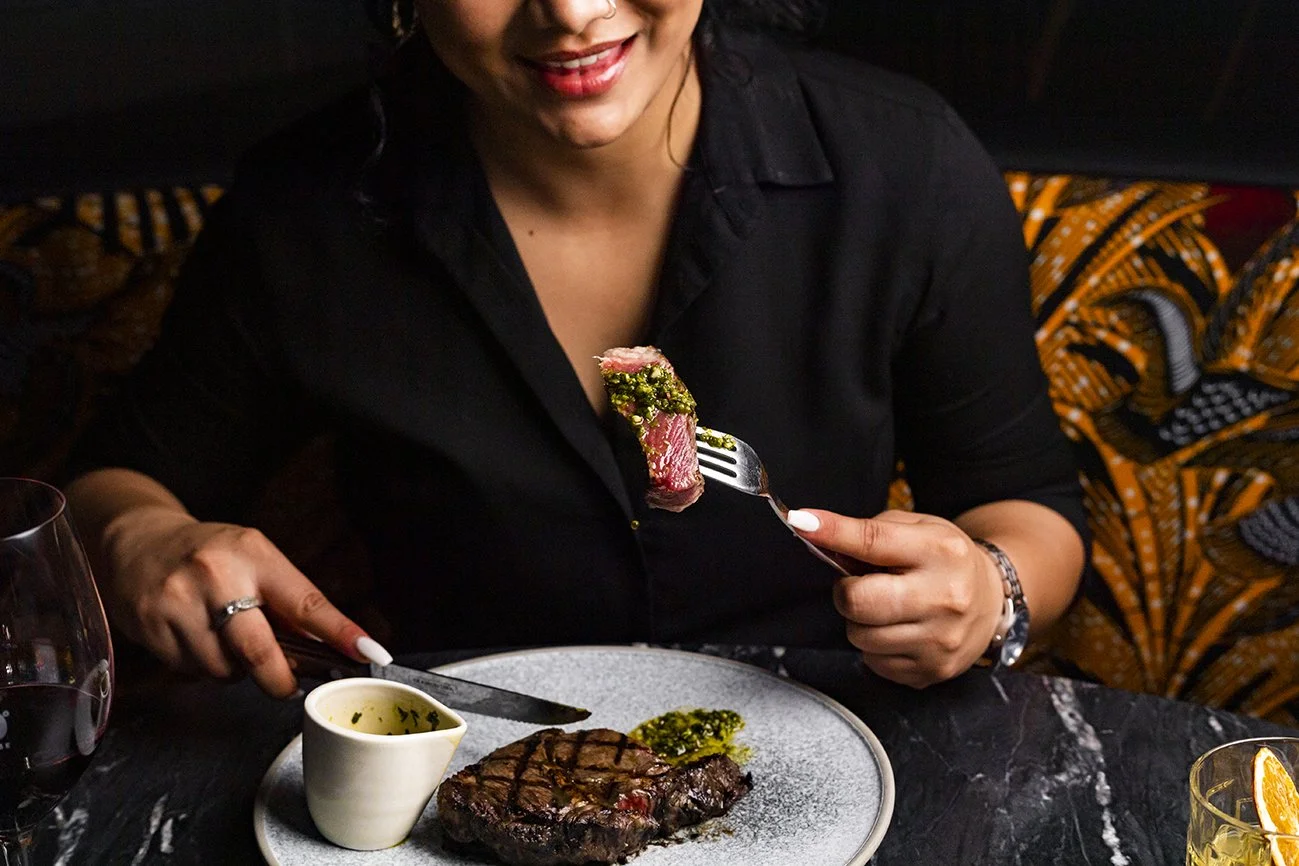
How Our Chefs Test Doneness
Cutting into a steak to check the middle lets the juices run straight out onto the plate, so professional kitchens use two other methods instead.
The touch test compares the give of the steak to the fleshy part of your palm below the thumb, using different finger positions to mimic each doneness level. It's fast and doesn't damage the meat, but it takes years to calibrate by feel alone and varies with the cut and the steak's thickness.
A digital probe thermometer removes the guesswork. Inserted into the thickest part of the steak, away from bone or fat pockets, it gives an exact internal reading in seconds. Our chargrill chefs use both together. The touch test for a first read during cooking, the thermometer to confirm before the steak comes off the flame.
How to Cook Steak Medium Rare at Home
Getting a medium rare steak right at home comes down to heat, timing and patience:
Bring the steak to room temperature before it hits the pan or grill. A cold centre throws off your timing.
Get the pan or grill hot before the steak goes on; a weak sear won't build the crust that locks in flavour.
Cook to temperature, not time. For a 2.5–3cm thick steak, that's usually 3–4 minutes a side over high heat, but a thermometer beats a stopwatch every time.
Pull it at 52–53°C and let carry-over heat finish the job.
Rest for 5–10 minutes under loose foil before cutting, so the juices redistribute instead of pooling on the board.
Which Cut Suits Which Doneness
Fat content determines how forgiving a cut is at higher or lower doneness levels. Well-marbled cuts like ribeye and our signature 1.5kg tomahawk carry enough intramuscular fat to stay juicy right through to medium, and shine hardest at medium rare, where that fat has time to render.
Leaner cuts like eye fillet and rump have far less fat to fall back on, so they're at their best rare to medium rare and dry out quickly past that point. If you're weighing up cuts before you book, our guide to the different cuts of steak breaks down the differences in marbling and texture in more detail.
Is Medium Rare Steak Safe to Eat?
Yes, when it's a whole-muscle cut. Bacteria on a solid piece of beef (a scotch fillet, tomahawk, sirloin, or eye fillet) are concentrated on the outside surface, not distributed throughout the middle. Searing the exterior at high heat kills that surface bacteria, which is why the centre can stay pink and safe at the same time.
Mince is a different story. The grinding process mixes surface bacteria throughout the meat, so there's no "clean" centre left; that's why a burger patty needs to be cooked right through. It's also why a rare steak and a rare burger carry different levels of risk, even from the same cut of beef.
What Temperature Is Medium Rare in Celsius?
Medium rare sits between 55°C and 60°C at the centre, measured after the steak has rested. Pull the steak from the heat a couple of degrees below that, since carry-over cooking closes the gap.
Why Do Chefs Recommend Medium Rare?
Medium rare hits the point where enough fat has rendered to carry flavour through the meat, while the muscle fibres haven't yet tightened up and pushed moisture out. It's the doneness with the widest margin for error on a well-marbled cut, which is part of why it's the default order in most Australian steakhouses.
Book Your Steak, Done Exactly Right
Whichever way you like it, a steakhouse in Sydney is only as good as its consistency. Whether it's a milestone dinner, a long lunch, or a Sydney corporate venue booking for the team, tell your server your preferred doneness and our chargrill chefs will hit it.
Looking for something lower-key midweek? Our steakhouse lunch specials use the same chargrill and the same standards at lunchtime prices. Book a table at Cronulla, Kogarah or Parramatta, or drop by our bar and grill in Sydney for something more casual.