
Is Steak Halal? What Certification Actually Covers
Steak can be halal, but only when the animal has been slaughtered and processed to halal standards from paddock to plate.
In Australia, halal steak depends on the slaughter method, who carries it out, and how the meat is handled afterwards. If a special-occasion dinner needs to meet halal requirements, or you've simply wondered what that certification logo stands for, here's what halal meat certification covers.
Key Takeaways
Steak is halal only when the animal was slaughtered using the Islamic method (dhabihah) by a trained, certified slaughterer who invokes the name of God at the time of slaughter.
Certification also covers what happens after slaughter, including processing, storage and transport, since cross-contamination with non-halal products can affect the outcome.
Not all Australian beef is halal by default. Certification is a deliberate process that a producer or restaurant applies for.
Recognised certifiers operating in Australia include the Australian Federation of Islamic Councils (AFIC), Halal Certification Authority Australia, and the Islamic Co-ordinating Council of Victoria (ICCV).
The clearest way to check whether a restaurant's halal steak is genuine is to ask which body certifies it and look for their logo or certificate on display.
What "Halal" Actually Means
Halal is an Arabic word meaning "permitted" or "lawful" under Islamic law. Everything is considered halal unless it falls into one of two other categories: haram (forbidden, such as pork and alcohol) or mashbooh (doubtful, meaning it can't be classified either way without more information about how it was made). The Parliamentary Library's guide to halal certification in Australia clearly sets out this three-way distinction, and it's the framework every certifier works from.
For steak, this matters because beef itself isn't automatically halal or haram. What determines it is the slaughter and everything that happens to the meat afterwards.
What Halal Meat Certification Requires in Australia
Certification is more detailed than most diners realise. It covers the entire chain from slaughter through to the plate.
The Slaughter Method
The animal must be killed using dhabihah, a swift cut to the throat performed by a trained Muslim slaughterer who invokes the name of God at the time of slaughter. The animal must be alive and healthy immediately beforehand, and the blood must be properly drained.
Who Performs It
The slaughterer needs to be a practising Muslim who has been trained and registered by an approved certifying body. For meat destined for export, this is legislated in detail – the Department of Agriculture, Fisheries and Forestry oversees the Australian Government Authorised Halal Program (AGAHP), which requires certifying organisations to train and supervise Muslim slaughtermen and audit ongoing compliance.
No Cross-Contamination
Certification doesn't stop at the abattoir door. Processing, storage, and transport all need to keep halal products separate from anything non-halal, and the same standard applies in a restaurant kitchen. Shared grills, boards, and utensils can compromise halal status if they're also used for non-halal food.
No Non-Halal Ingredients
Marinades, sauces, and stocks all count. Alcohol-based marinades, non-halal gelatine, and certain emulsifiers can turn an otherwise properly slaughtered steak into something that no longer meets halal requirements by the time it reaches the table.
Who Provides Halal Meat Certification in Australia
Several organisations issue halal certification in Australia, and there's no single national body, which is part of why the topic causes confusion. The Australian Federation of Islamic Councils (AFIC) is one of the longest-running certifiers, describing its Halal Certification service as ensuring affordable and nutritious halal meats and drinks are readily available to Muslims across Australia. Alongside AFIC, other prominent certifiers include Halal Certification Authority Australia and the Islamic Co-ordinating Council of Victoria (ICCV).
For meat exported to Muslim-majority countries, certifiers must go further and hold an Approved Arrangement with the federal government under AGAHP, which involves ongoing government audits. Only halal red meat and red meat products that comply with AGAHP and the requirements of the importing country are eligible for an official Australian halal certificate.
Steak places in Sydney serving halal steak domestically aren't bound by this specific export scheme, but reputable venues still work with one of the recognised religious certifying bodies rather than self-declaring.
How to Tell If a Restaurant's Halal Steak is Genuine
If you’re looking for a halal steak in Sydney, a menu that says "halal" doesn't tell you much on its own. A few direct questions get a far more useful answer:
Which body certifies the kitchen, and is its certificate on display or available on request?
Does the certification cover the entire menu or only specific dishes?
Are shared grills, utensils, or fryers used for non-halal items?
Are sauces, marinades, and stocks made in-house, and do they contain alcohol or non-halal gelatine?
Certification is about the process, not the cut itself. Marbling, ageing, and the way a steak is grilled are entirely separate questions. If you want to understand what actually shapes flavour and tenderness once the halal side is settled, our guide to cuts of steak explained breaks down how different cuts perform on the grill.
Does Halal Certification Affect the Taste of Steak?
No. Halal certification governs the slaughter method and the handling of the meat and does not affect ageing, marbling, or cooking techniques. A halal-certified steak that's been dry-aged and chargrilled properly tastes exactly as good as any other steak prepared the same way.
Find Certified Halal Steak at 500 Degrees
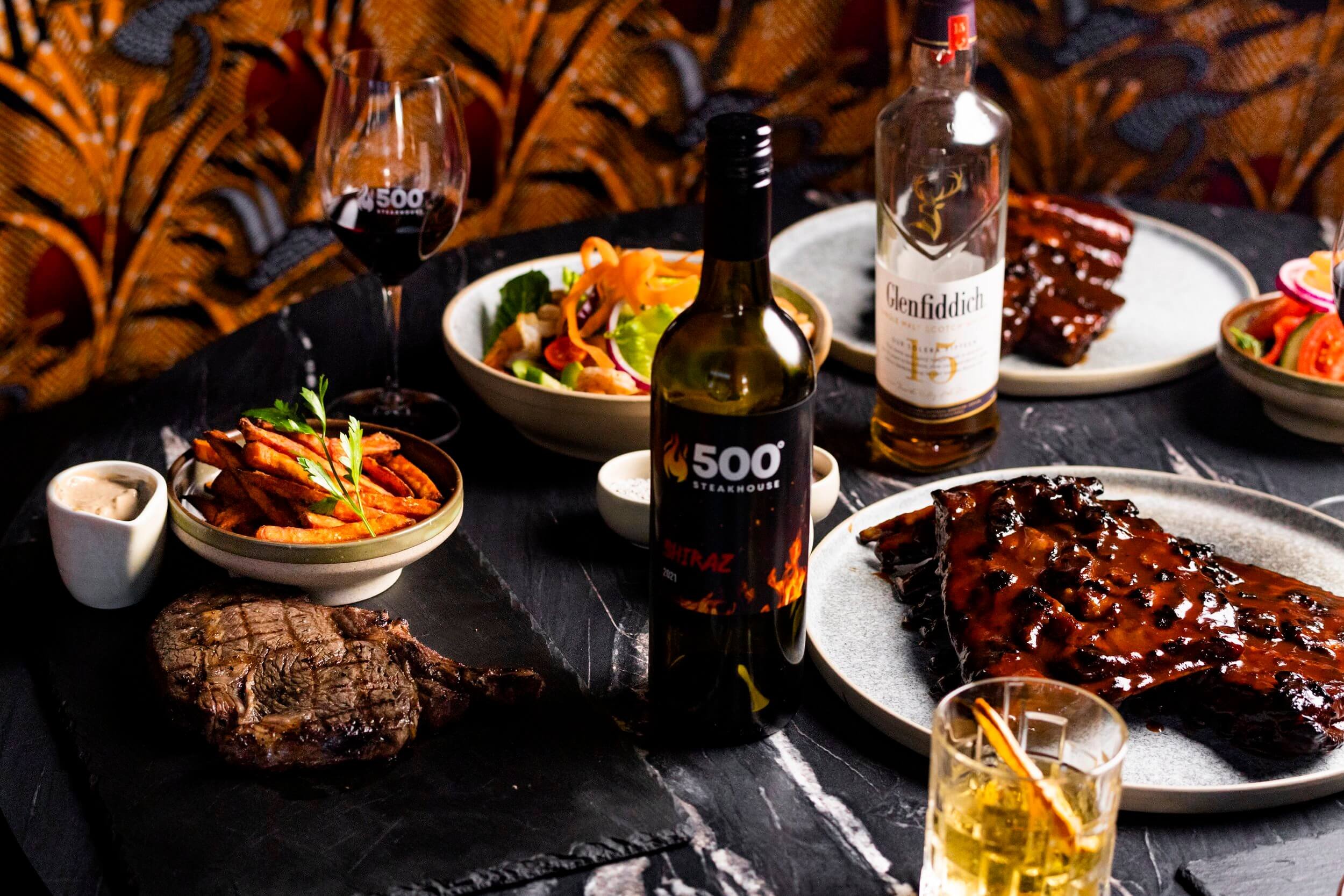
At 500 Degrees, every steak served at our steak restaurant in Parramatta is halal-certified, with an in-house butcher overseeing the process. If you're planning a special-occasion lunch or dinner and want the reassurance without any compromise on the open-flame chargrilling or dry-ageing we're known for, we're ready to host you. Whether that's a relaxed evening at our bar and grill, a family celebration at our, or a larger event in one of our function rooms in Parramatta.
FAQs
Is Australian beef halal by default?
No. Beef produced in Australia isn't automatically halal simply because of where it comes from. Halal status depends on the slaughter method and subsequent handling, and has to be certified by a recognised Islamic organisation.
What does halal-friendly mean versus halal-certified?
"Halal-friendly" is an informal, unregulated term that usually means a menu has some halal options or avoids pork and alcohol, without the meat itself necessarily being certified by an accredited body. "Halal-certified" means an actual certifying organisation has audited the slaughter, ingredients, and handling process and issued a certificate. If genuine compliance matters to you, certified is the term to look for.
Does halal affect the taste of steak?
No. Halal certification concerns how the animal was slaughtered and how the meat was subsequently handled, not flavour, marbling, or cooking method. A halal-certified steak can be dry-aged, chargrilled, and finished exactly like any other premium cut.